

“I may have underestimated the work involved, but I cannot undervalue the amount of learning I’ve taken away from tutors, coursework and other students. As well as helping me personally it has given me a new perspective on a range of issues that will improve how I lead my organisation for the benefit of the communities we serve.”
— 2025 Graduate
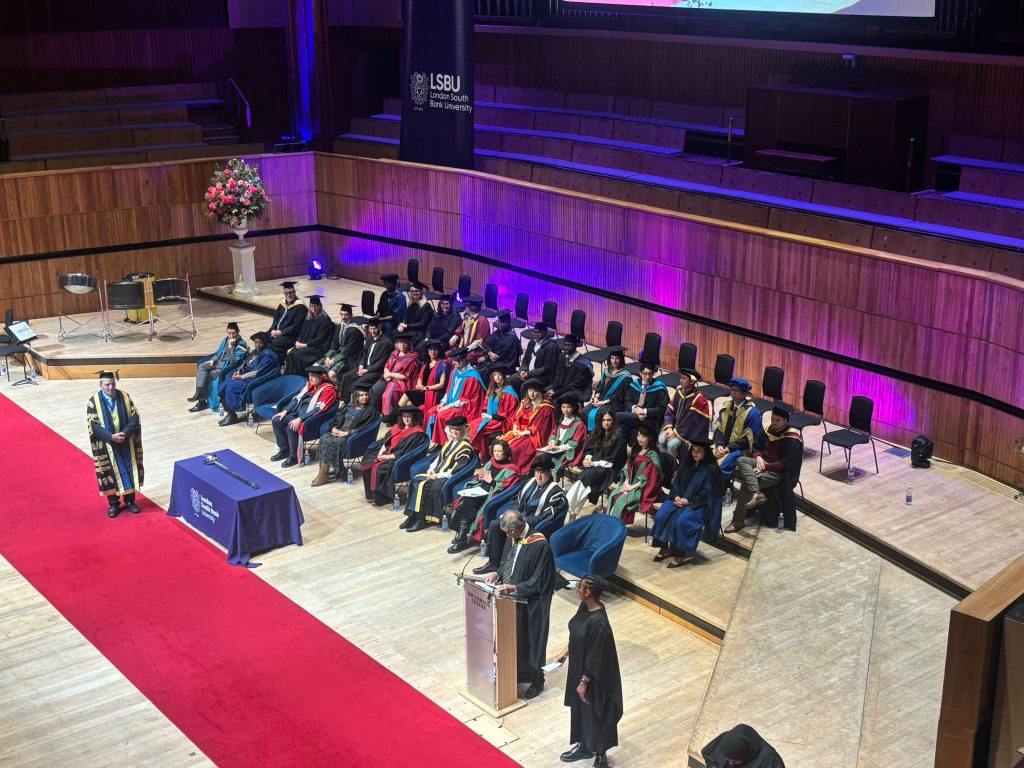
It’s always a special moment when a new cohort completes the Postgraduate Certificate in Leadership and Management officially as marked by the graduation ceremony at the Royal Festival Hall.
It’s also a good time to pause, take stock, and look honestly at what’s working well and what could be improved. And who better to tell us that than our new graduates, who’ve experienced the course firsthand?
Highlights from this year’s end of course survey
Recruitment and selection
Recruitment and selection were praised as fair, clear, and welcoming, setting the tone for the year ahead. The interview process stood out. Although interviews have the potential to be nerve-wracking, applicants noted how comfortable they felt, and that the informal yet informative set-up helped them bring their best selves to the table.
Standout modules
When it came to the teaching, two modules stood out as unanimous successes. Leadership and Management and Organisational Development both received the highest possible ratings, with all 16 respondents agreeing or strongly agreeing that:
- the content was useful
- the teaching was engaging and of good quality
- the tutors were supportive
- the module was enjoyable
- the level was pitched just right.
The Leadership and Management module explores different concepts of leadership and management, with a focus on what styles are most effective in the homelessness and housing context. Students are assessed through reflective coursework and a written assignment that applies theory directly to their own organisation. One student summed it up simply:
“Blown away with the knowledge and experience of the tutor, who also made the learning fun, incredibly interactive and engaging.”
The Organisational Development module introduces theories and techniques for understanding and leading organisational change, drawing links between organisational development, behaviour, and human resource management. Assessment includes a major assignment based in students’ own organisations and a presentation of their recommendations. One student described it as: “Such a valuable module, I would take this again.”
The power of networking and peer-to-peer learning
Beyond the modules, graduates consistently spoke about the wider experience of the course. The cohort itself was one of the most valued aspects, with participants highlighting peer connection, community, and learning from others. The diversity of backgrounds and experiences was seen as enriching discussions, broadening perspectives, and building lasting professional networks.
Engaging and Inclusive Tutors
Tutors were also praised for being engaging, open, and inclusive. Their mix of practical and theoretical learning, real-world examples, and ability to create space for rich debate was appreciated, and they were described as inspirational and generous with their time and expertise.

Challenges and looking ahead
Finance for Non-Finance Managers
The Finance for Non-Finance Managers module, which introduces students to the basic concepts and practices of accounting and finance and builds an understanding of financial reporting within Civil Society and Public Sector organisations, has traditionally been a divisive one. Many people are more apprehensive about this element of the course as financial experience varies. Students who take advantage of the extra support sessions on offer fine these very beneficial to navigate the challenges of the subject.
To help ensure this element of the course is as enjoyable as it is valuable LSBU are looking at implementing more interactive teaching, and new case study materials drawn directly from the housing and homelessness sectors.
Feedback like this is invaluable. It is how we keep improving, and we are already working closely with LSBU to make sure this part of the course better meets the needs of future cohorts.
Looking ahead – planning for the future
Graduates also shared ideas about what comes next. Many are keen to stay connected through alumni activities such as networking events and professional development opportunities. The message is clear: the learning does not stop at graduation.
What difference does it make?
The course is not just an academic exercise to complete modules and demonstrate the acquisition of knowledge with assignments (although that of course happens too!). It is also about real change in how people work and lead. All 16 students reported that:
- the course has changed the way they work in their current role
- they made valuable new connections
- they valued the mixed-sector cohort, with participants from charities, housing associations, and local authorities
- they would recommend the course to others.
The only slight drop came with career progression, where a small number felt less certain about the immediate link to securing their next steps, though most were confident about the course’s role in their development.
Find out more
To find out more about the course please visit LHF’s website: https://lhf.org.uk/leadership-course. The course is designed for experienced staff in the homelessness and related sectors who want to step up into leadership and management. Please note that you must be in a permanent, line management role to apply. No previous degree is required.
If you have questions or are interested in being alerted to applications opening in February for the September 2026 start, please contact Course Director Becky Rice at becky.rice@lhf.org.uk.